Safe Working At Height Course
Key Features
Of this Working At Height Course:
- Covers the complete Work at Height Regulations 2005 and current HSE guidance for all common access methods
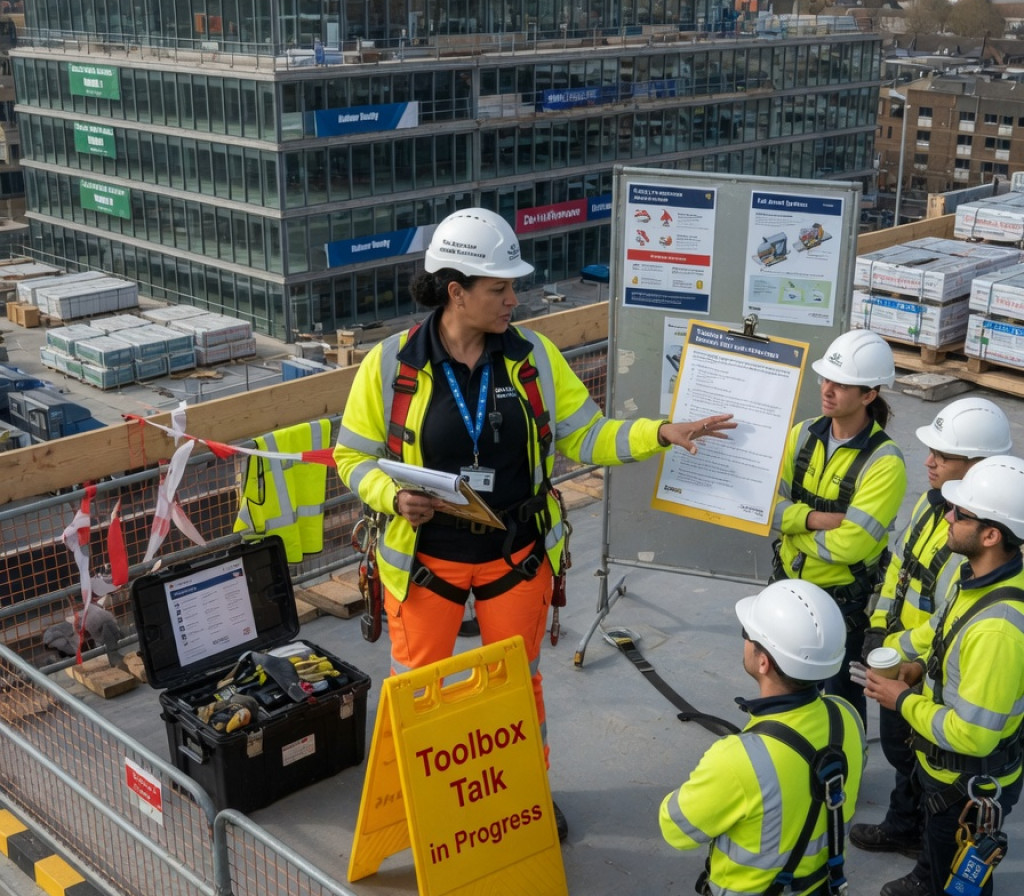
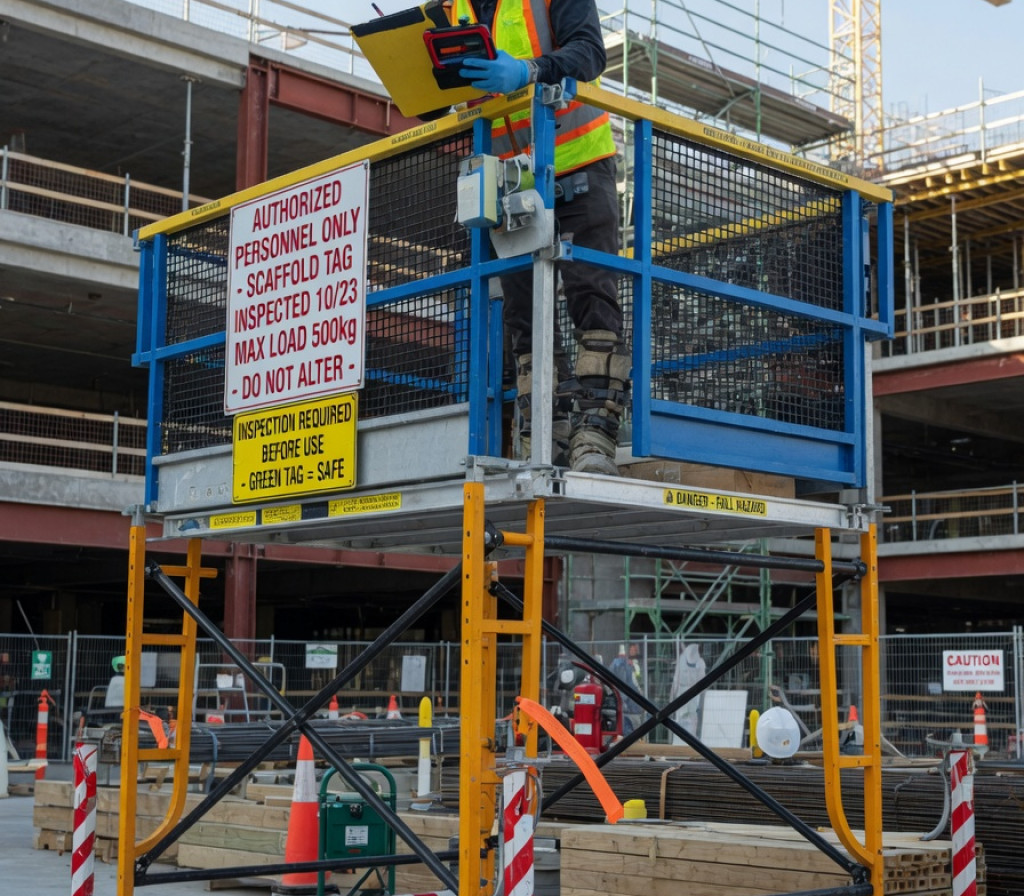
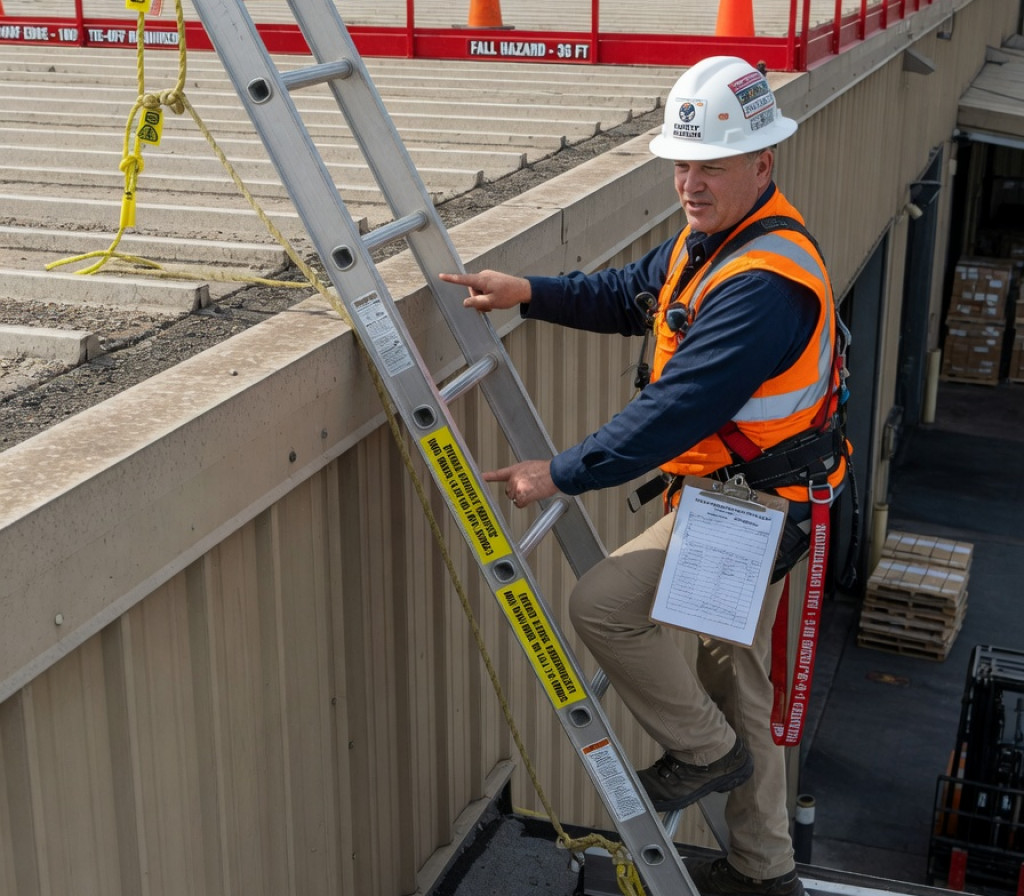
- Includes practical sessions on ladders, step ladders, mobile towers, scaffolds, MEWPs and fall-arrest systems
- Teaches hierarchy of controls, risk assessment and rescue planning using real site scenarios
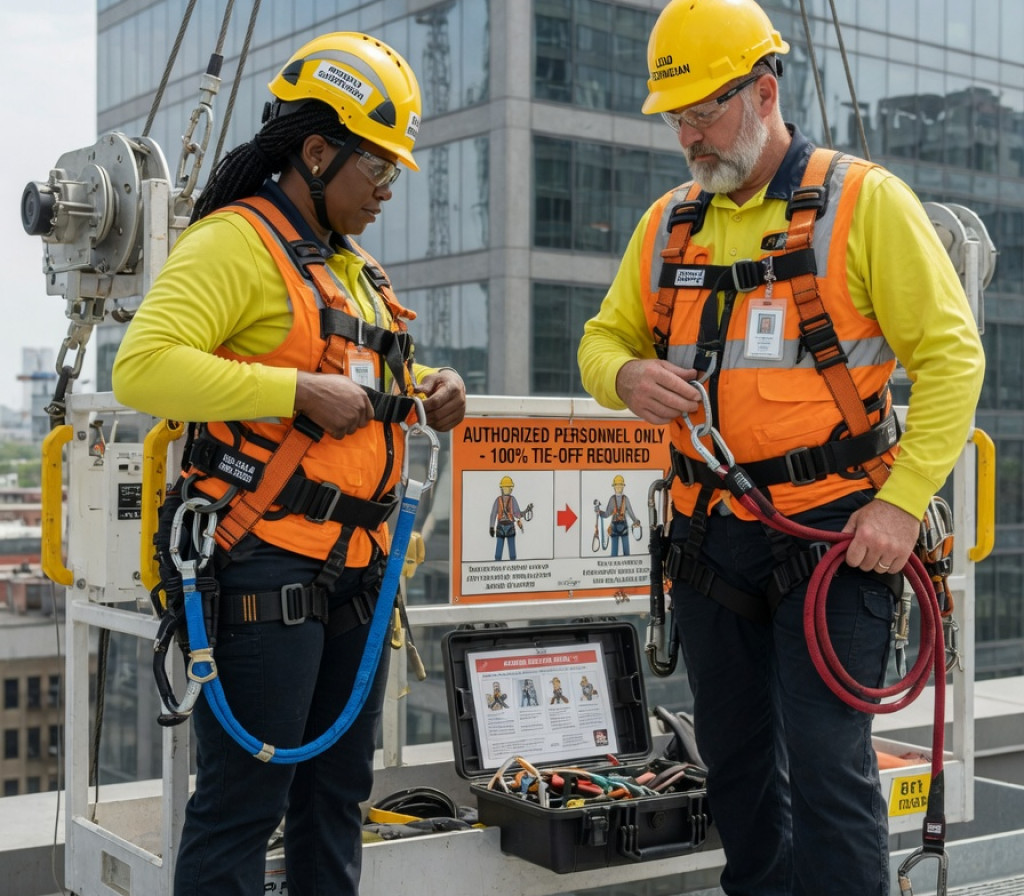
- Emphasises equipment inspection, pre-use checks and correct fitting of harnesses and lanyards
- Addresses weather, fragile surfaces, overhead services and lone-working situations encountered on UK sites
Course Date Availability
Working At Height training at the following 6 centres. Prices from £70 per person :
| Training Centres | Next Available Dates |
|---|---|
| Blackburn | 14th Aug 20268th Sep 2026 |
| Bristol | 27th Jul 2026 |
| Derby | 7th Aug 202611th Sep 2026 |
| Leeds | 24th Jul 20263rd Aug 2026 |
| Plymouth | 28th Jul 2026 |
| Reading | 11th Aug 20269th Sep 2026 |
Course Information
Overview:
Safe Working at Height training provides delegates with the knowledge and practical skills required to plan, organise and carry out work at height safely in accordance with UK legislation. The course examines the full range of access equipment and fall-protection methods used across construction, maintenance, facilities management and industrial environments. Delegates learn how to apply the hierarchy of controls, conduct site-specific risk assessments and develop effective rescue arrangements that meet current HSE expectations.
Who Should Attend?
This course is designed for:
- Construction operatives and site supervisors
- Maintenance engineers and facilities staff
- Roofing and cladding contractors
- Scaffolders and access equipment users
- Warehouse and logistics personnel
- Health and safety advisors requiring refresher knowledge
What You Will Learn
By the end of the course you will be able to:
- Legal duties under the Work at Height Regulations 2005 and associated guidance
- How to select the most suitable access equipment for each task
- Correct inspection, fitting and use of harnesses, lanyards and anchor points
- Safe erection, use and dismantling of mobile towers and step ladders
- MEWP selection, pre-use checks and ground conditions
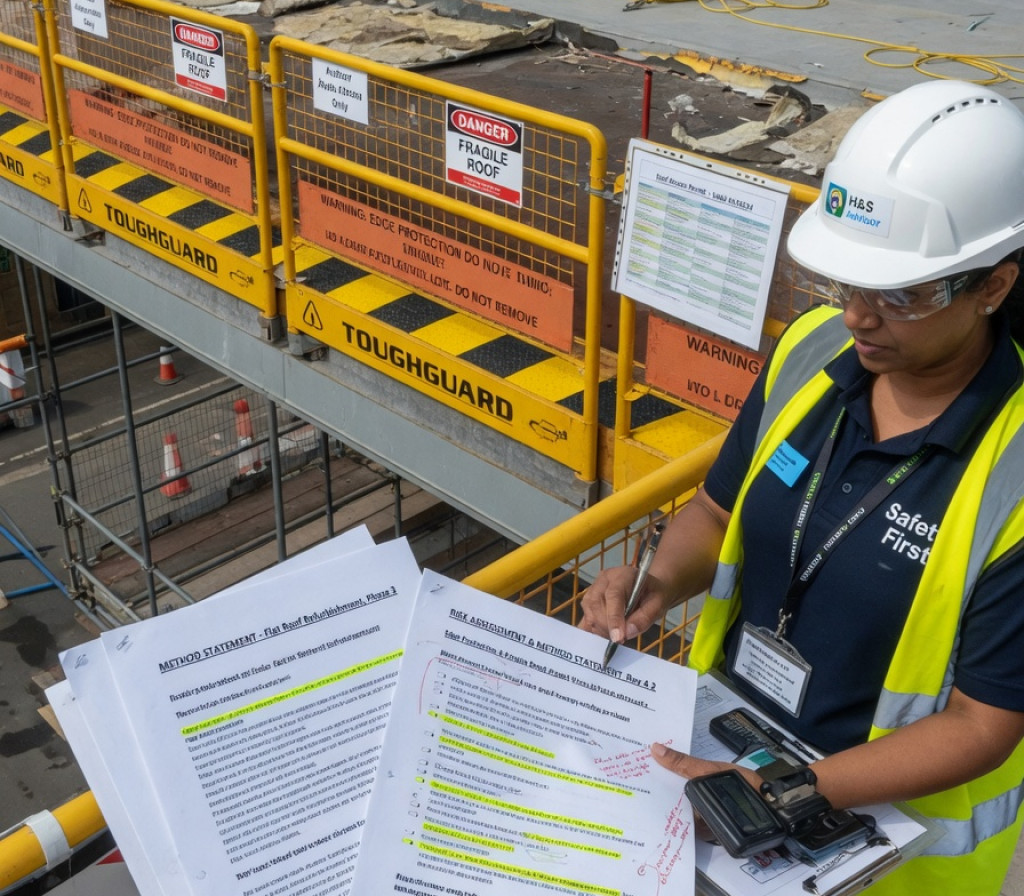
- Fragile roof procedures and edge protection requirements
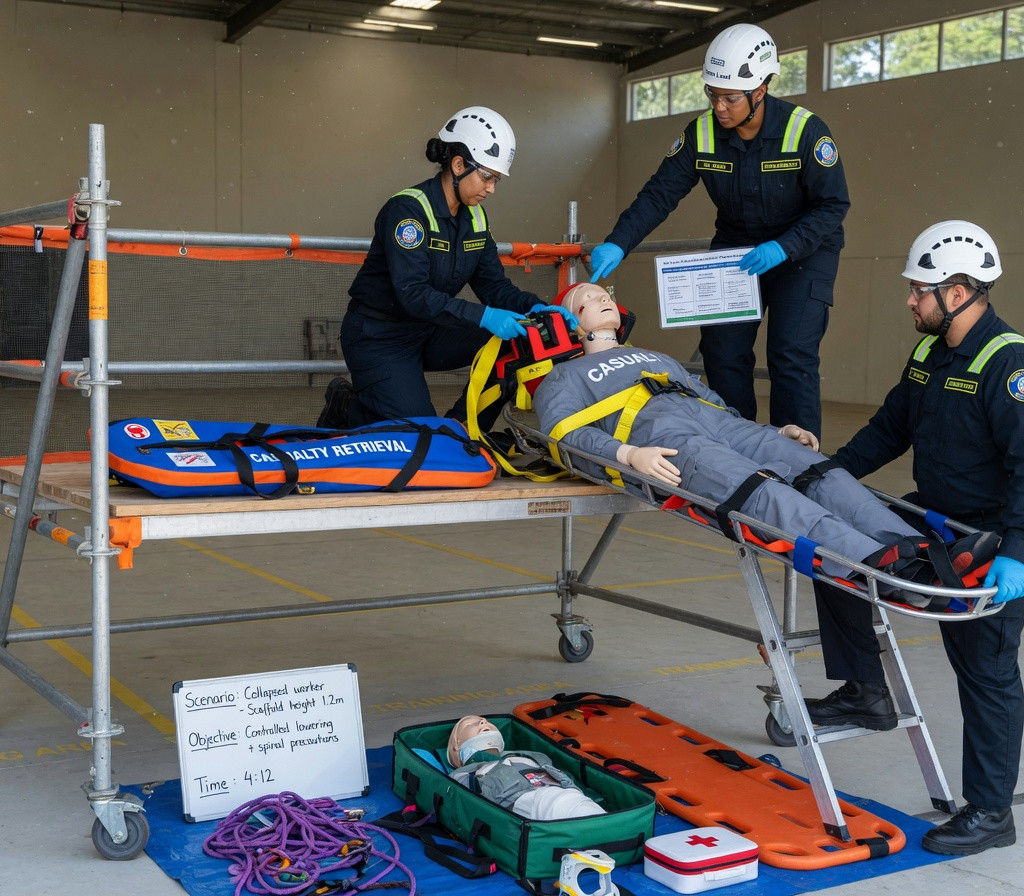
- Planning and carrying out a simple rescue
- Weather-related hazards and dynamic risk assessment
Course Agenda
Overview:
The course runs over one full day and combines classroom-based theory with practical exercises on a range of access equipment. Delegates complete both written and practical assessments throughout the day.
Key Modules Covered
What you will learn:
- Work at Height Regulations and HSE hierarchy of controls
- Risk assessment and method statement development
- Ladder and step-ladder selection and safe use
- Mobile access towers and scaffold awareness
- Mobile elevating work platforms (MEWPs)
- Personal fall protection systems and harness inspection
- Fragile surfaces and edge protection
- Rescue planning and emergency procedures
Private Courses On-site
Safe Working At Height training is also available as a dedicated course, at your premises, and on a date and time of your choosing. Advantages of group / private course is the convenience of candidates being in familiar surroundings and not having to travel, the lowest price, and the ability to have the course tailored to your own application.
Latest Delegate Feedback
⭐ Rated 4.3 By Our Candidates - (172 reviews)
Every delegate said the class / course was valuable. Having Claudia Mustata on hand was really helpful.
★★★★★
5 ⭐ – Tony D - Wed 24th Jun 2026
Full of well prepared material...
★★★★★
5 ⭐ – Wayne - Sun 24th May 2026
Training course held at our premises recently was plaudits. Nicoleta Angheluta really helped us.
★★★★★
5 ⭐ – John C - Sat 23rd May 2026
Safe Working At Height Session was taught very well.
★★★★★
5 ⭐ – John H - Sat 23rd May 2026
Accreditation & Next Steps
What you will achieve as a result:
Delegates who successfully complete the assessments receive a certificate of training. The qualification remains valid for three years, after which a refresher course is recommended to maintain competence and update knowledge of current regulations and equipment.
Frequently Asked Questions
Most commonly asked Safe Working At Height questions:
The standard course is delivered over one full day combining theory and practical sessions.
No formal qualifications are required, although delegates should be physically capable of using the equipment and wearing PPE.
The course addresses current regulations, risk assessment, all common access equipment types, harness use, fragile surfaces and rescue planning.
Delegates complete a short written test and demonstrate practical competence with ladders, towers and harness systems.
A certificate of training is issued to successful delegates confirming they have met the course objectives.
The certificate is normally valid for three years, after which refresher training is advised.
No. This is a general working-at-height course covering multiple access methods rather than operator certification for specific machines or towers.
Delegates should wear suitable work clothing and sturdy footwear. All specialist equipment and PPE is provided during practical sessions.
Yes. Practical exercises cover ladder setup, mobile tower erection and correct harness fitting and use.
Many providers can deliver the course at client premises where suitable facilities and equipment are available.
The course includes specific modules on identifying fragile surfaces, installing protection and safe access procedures.
Delegates learn to assess rescue requirements, select appropriate equipment and carry out basic retrieval techniques.
Prices per person typically start at £70. Discounts available for multi person or group bookings (depending upon location)
More Information
The training focuses on practical decision-making that delegates can apply immediately on site, covering the full spectrum of equipment and situations they are likely to encounter.
Last updated: Jun 2026 • Part of XYZ Training Group