Harness Essentials Course

Key Features
Of this Harness Essentials Course:
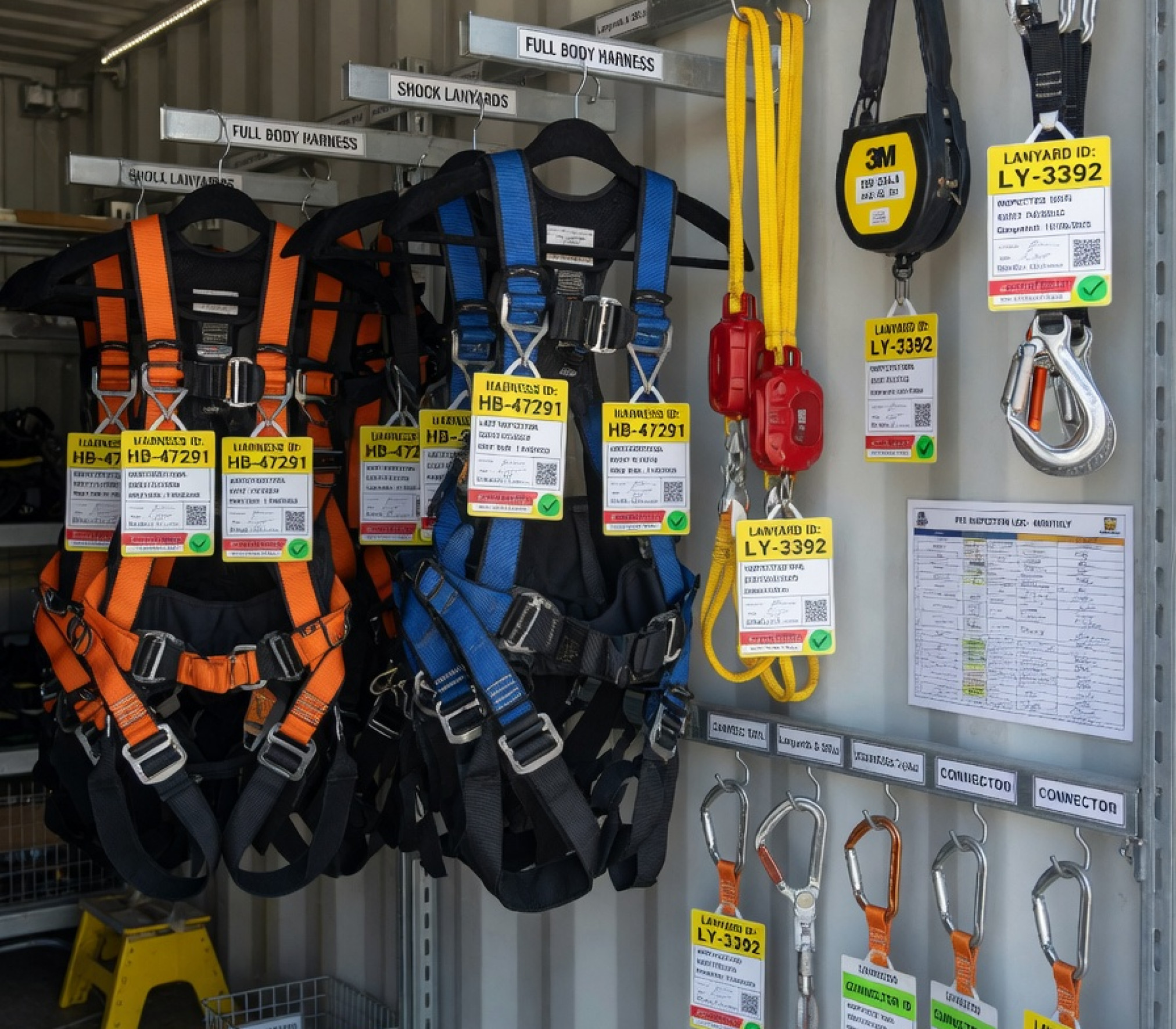
- Covers selection, inspection, fitting and use of full body harnesses and associated fall protection equipment across multiple work environments
- Addresses UK Working at Height Regulations 2005 and current HSE guidance on personal fall protection systems
- Includes practical sessions on anchor selection, fall clearance calculations and post-fall suspension procedures
- Suitable for operatives, supervisors and safety personnel who plan or carry out work at height
- Emphasises equipment compatibility, pre-use checks and record-keeping requirements for ongoing compliance
Course Date Availability
Harness Essentials training at the following 1 centres. Prices from £150 per person :
| Training Centres | Next Available Dates |
|---|---|
| Romford | 16th Jul 202630th Jul 2026 |
Course Information
Overview:
Harness Essentials provides comprehensive training on the correct selection, inspection, fitting and use of personal fall protection equipment. Delegates learn how different harness configurations, lanyards and anchor devices work together to prevent falls or limit their consequences in real workplace situations such as roof work, maintenance on structures, and access on mobile plant. The course reflects current UK legislation and industry practice for anyone who must rely on harness systems as part of their daily tasks.
Who Should Attend?
This course is designed for:
- Construction operatives and roof workers
- Maintenance and facilities technicians
- Scaffolders and steel erectors
- Wind turbine and telecoms technicians
- Health and safety advisors and supervisors
- Warehouse and logistics personnel working at height
What You Will Learn
By the end of the course you will be able to:
- Legal duties under the Work at Height Regulations and relevant HSE guidance
- Differences between fall restraint, work positioning and fall arrest systems
- How to carry out pre-use inspections of harnesses, lanyards and connectors
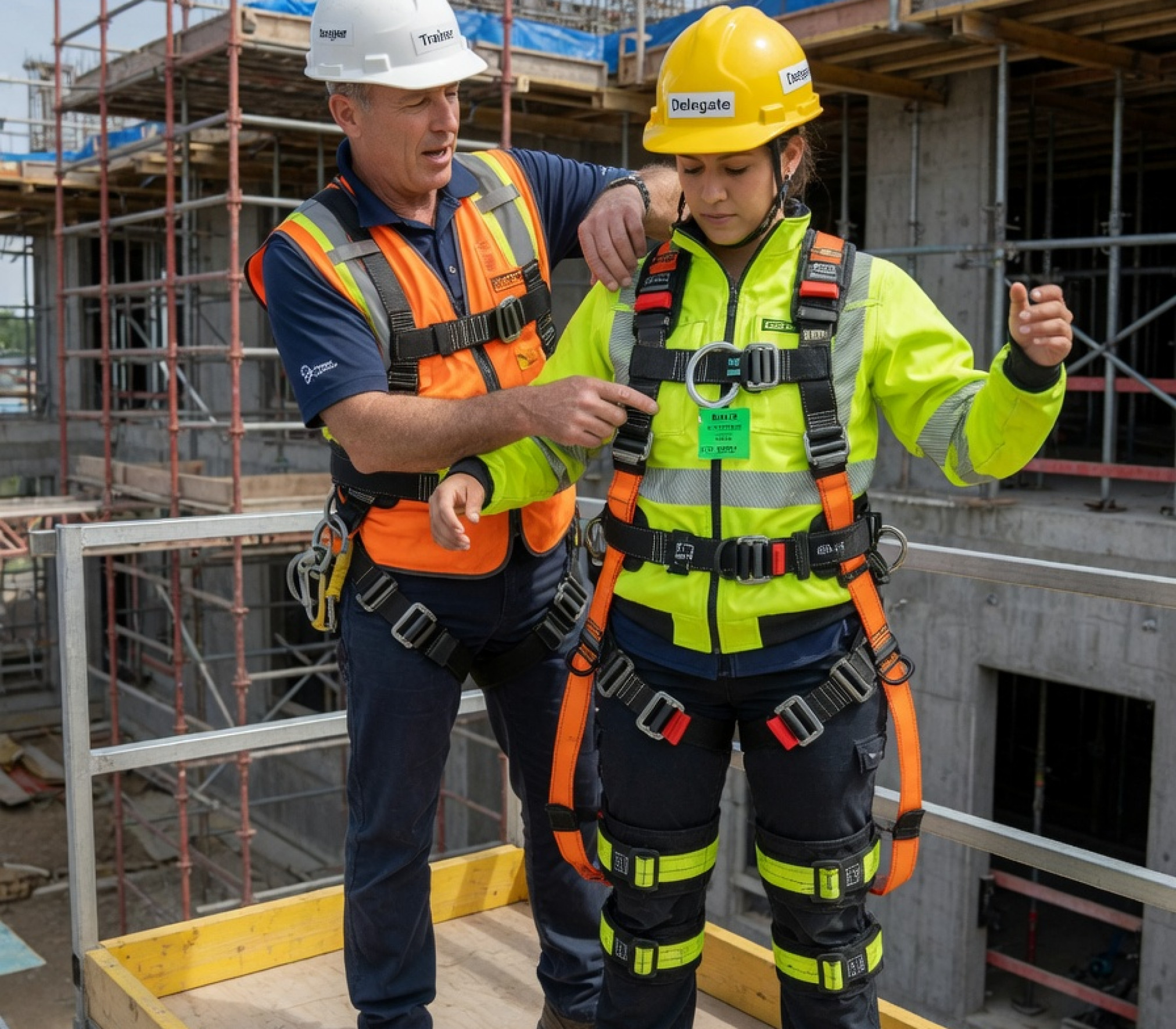
- Correct fitting and adjustment for comfort and safety across different body types
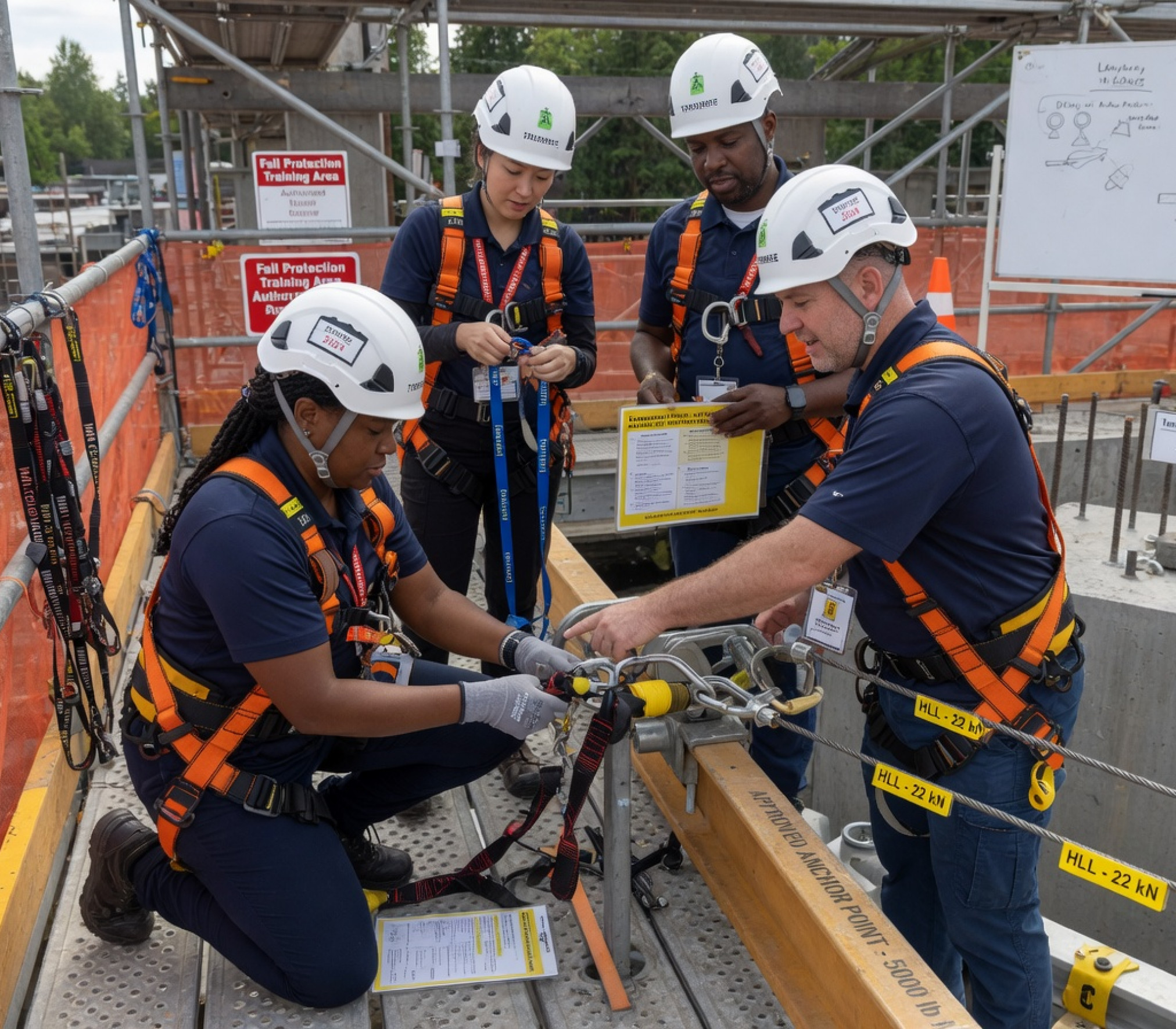
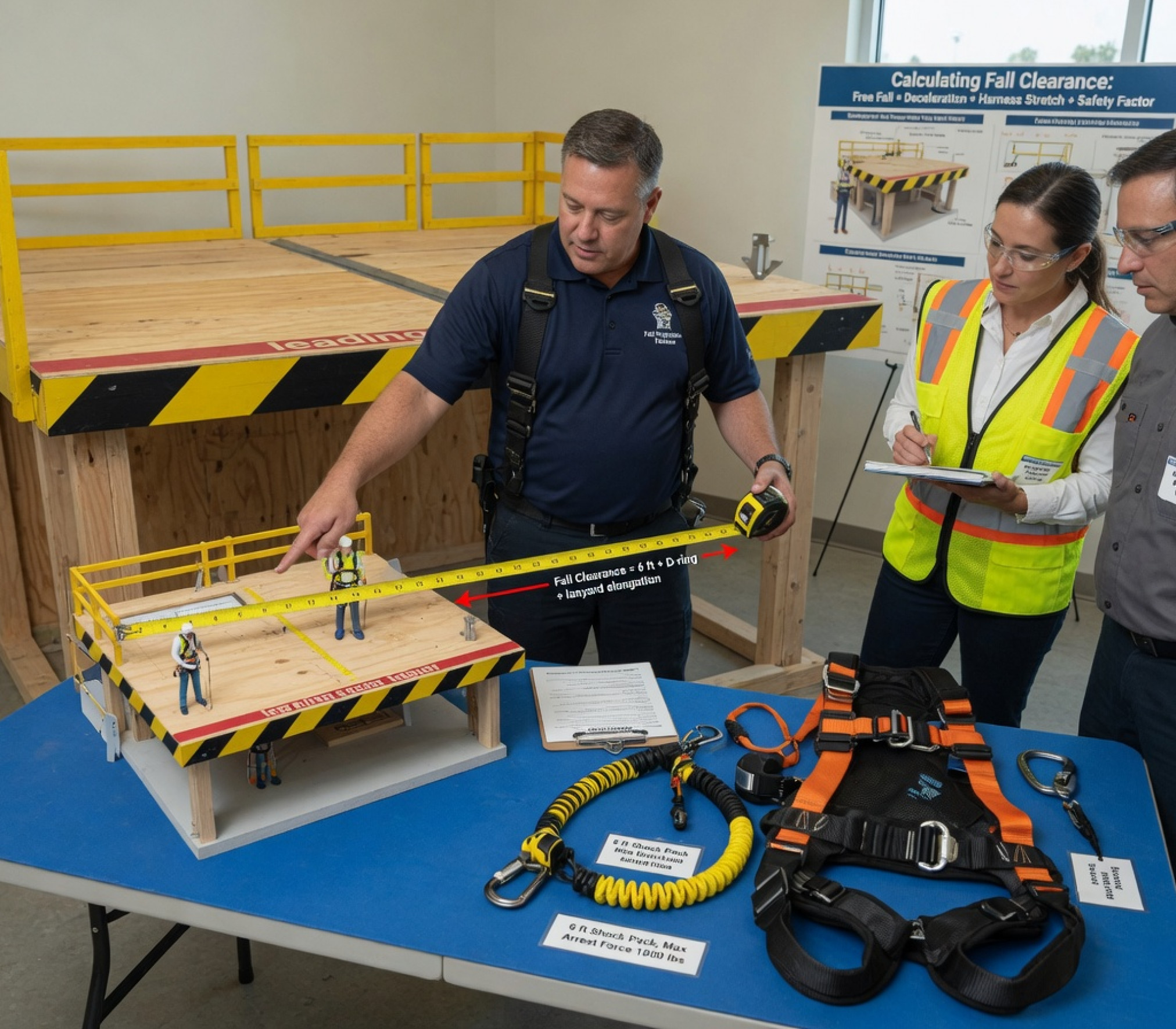
- Selection of suitable anchor points and calculation of required fall clearance
- Basic post-fall rescue techniques and suspension trauma awareness
- Equipment storage, maintenance and record-keeping responsibilities
Course Agenda
Overview:
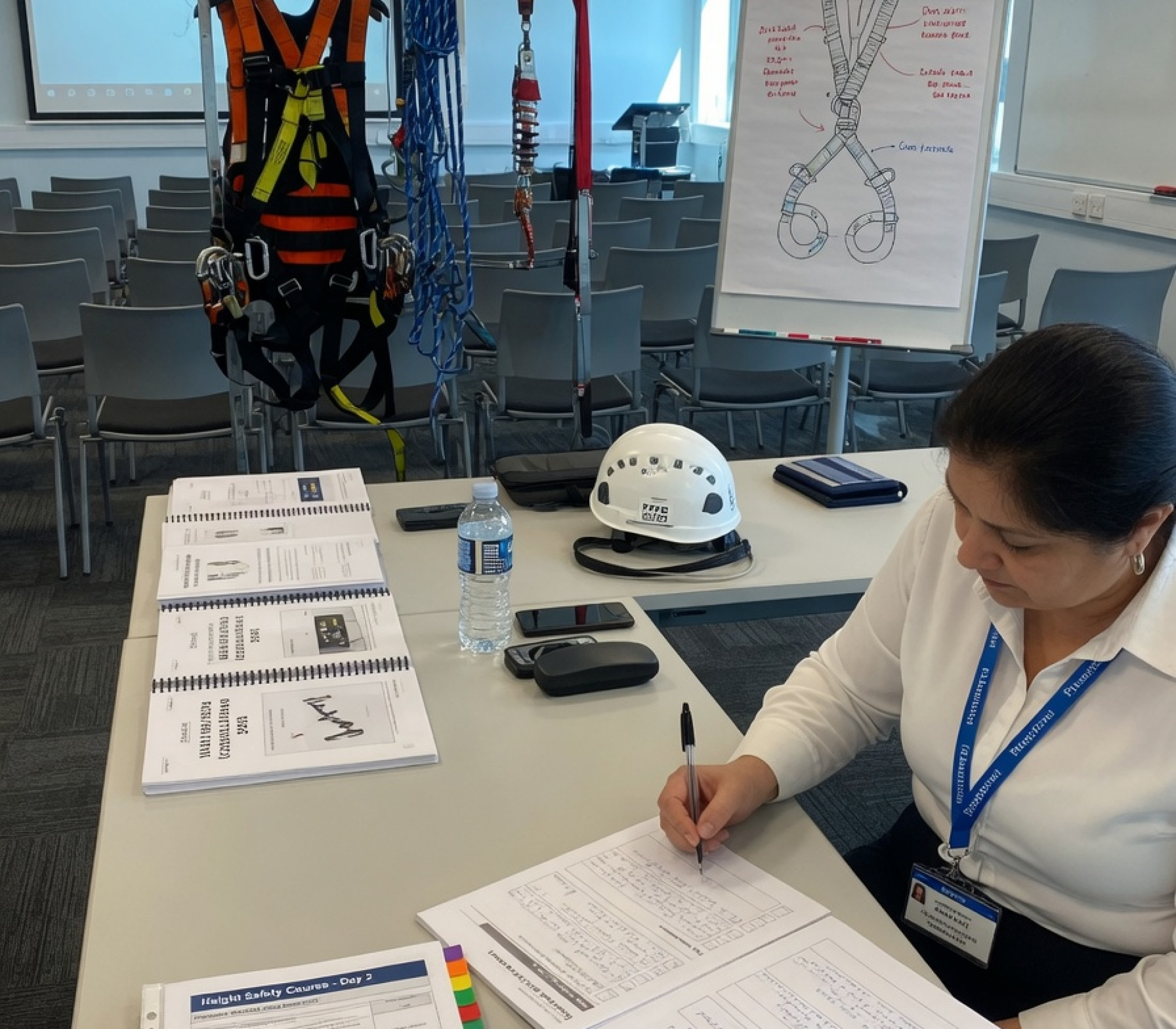
The course runs over one day and combines short theory sessions with practical exercises using a range of harness types on a training rig. Delegates complete both written and practical assessments.
Key Modules Covered
What you will learn:
- UK legislation, risk assessment and hierarchy of controls for work at height
- Harness types, lanyard configurations and compatible components
- Pre-use inspection, care and storage procedures
- Practical fitting, adjustment and anchor connection exercises
- Fall clearance calculations and swing fall hazards
- Emergency procedures and suspension trauma management
- Documentation, traceability and end-of-life criteria
Private Courses On-site
Harness Essentials training is also available as a dedicated course, at your premises, and on a date and time of your choosing. Advantages of group / private course is the convenience of candidates being in familiar surroundings and not having to travel, the lowest price, and the ability to have the course tailored to your own application.
Latest Delegate Feedback
⭐ Rated 4.2 By Our Candidates - (170 reviews)
Harness - Essentials Training day held at our premises recently was first rate. Tutor was excellent. . Karen is a fab account manager.
★★★★★
5 ⭐ – Kirsty J - Sun 10th May 2026
At least an 8 out of 10...
★★★★★
5 ⭐ – Lyle M - Tue 5th May 2026
Nice, just deserts to you all...
★★★★★
5 ⭐ – Charles - Sun 3rd May 2026
Fantastic....!
★★★★★
5 ⭐ – Christina M - Sat 2nd May 2026
Accreditation & Next Steps
What you will achieve as a result:
Delegates who complete the assessments receive a certificate of training that records the course content and date. Many employers require refresher training every three years or sooner if equipment or site conditions change significantly.
Frequently Asked Questions
Most commonly asked Harness Essentials questions:
The standard course is delivered over one full day, combining theory input with practical fitting and inspection exercises.
No formal qualifications are required. Delegates should be comfortable working at height and physically able to carry out the practical elements.
The course covers legislation, harness types, pre-use checks, correct fitting, anchor selection, fall clearance, basic rescue awareness and record keeping.
Assessment includes a short written test and observation of practical skills during fitting, inspection and connection exercises.
Successful delegates receive a certificate of training that states the course content and date of attendance.
The certificate does not expire but refresher training is commonly recommended every three years or when site conditions or equipment change.
This course focuses specifically on personal fall protection equipment rather than mobile elevating work platforms or mobile access towers.
Delegates should wear suitable work clothing and safety footwear. All harnesses and training equipment are provided during the course.
Yes, the course can be delivered at company premises provided suitable indoor and practical training areas are available.
Basic post-fall suspension awareness and simple rescue planning are included, though advanced rescue training may require a separate programme.
Yes. The course is designed for anyone who may need to wear a harness, whether regularly or infrequently, to ensure correct use every time.
Additional coaching is provided on the day. If further support is needed, delegates can usually return for a re-assessment at a later date.
Prices per person typically start at £150. Discounts available for multi person or group bookings (depending upon location)
More Information
The training focuses on practical skills that delegates can apply immediately when selecting and using harness systems in their own workplaces. Emphasis is placed on understanding equipment limitations and making informed decisions about when additional controls are required.
Last updated: Jun 2026 • Part of XYZ Training Group